

Description
Price: ₹1,555 - ₹399.00
(as of Aug 11, 2025 00:26:11 UTC – Details)

Product Description


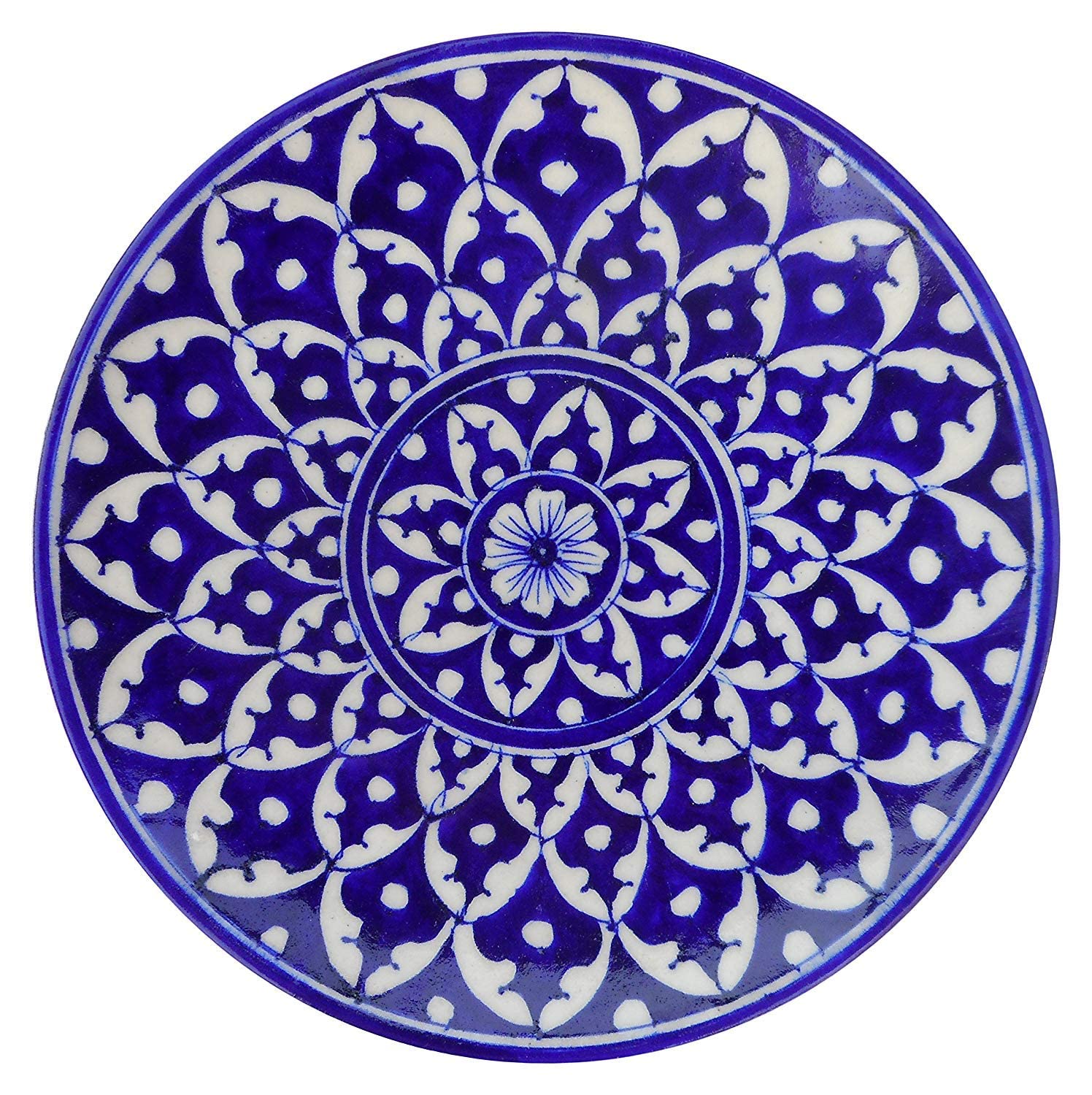
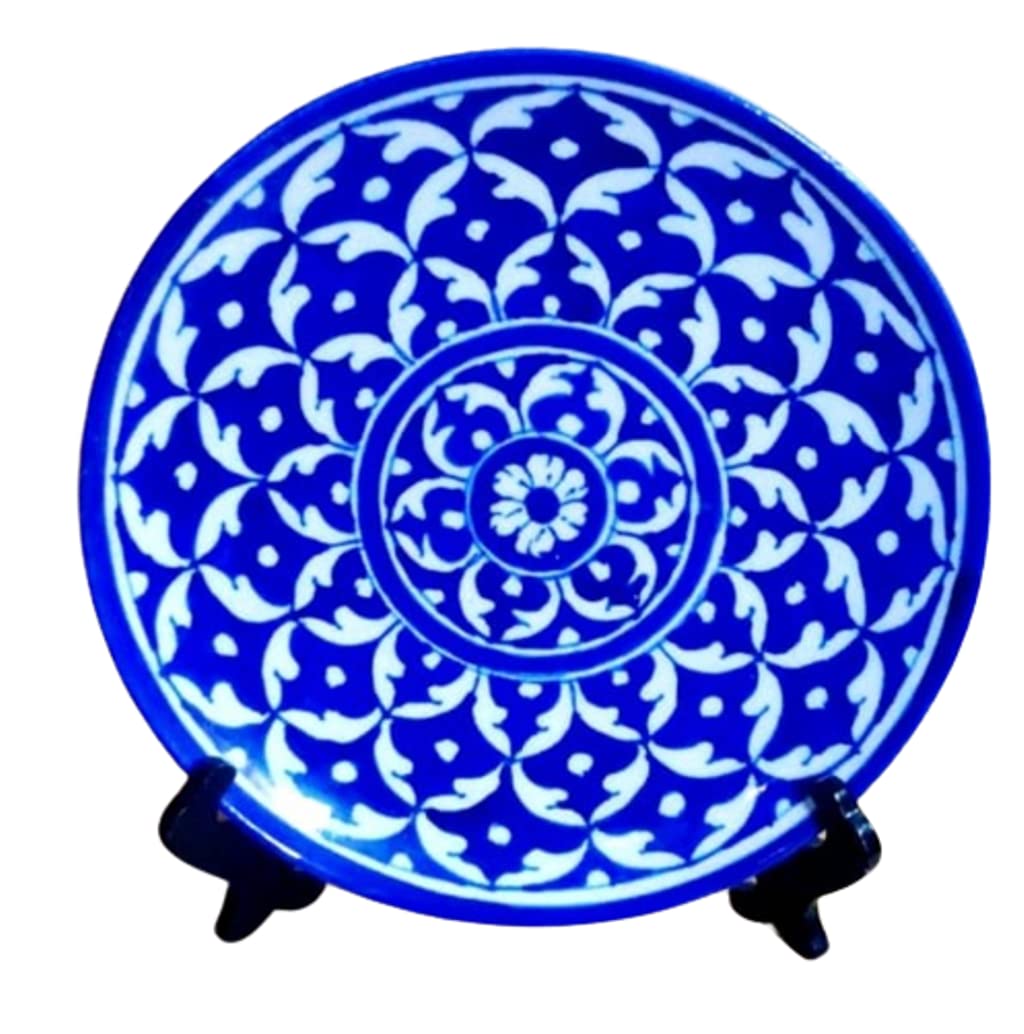
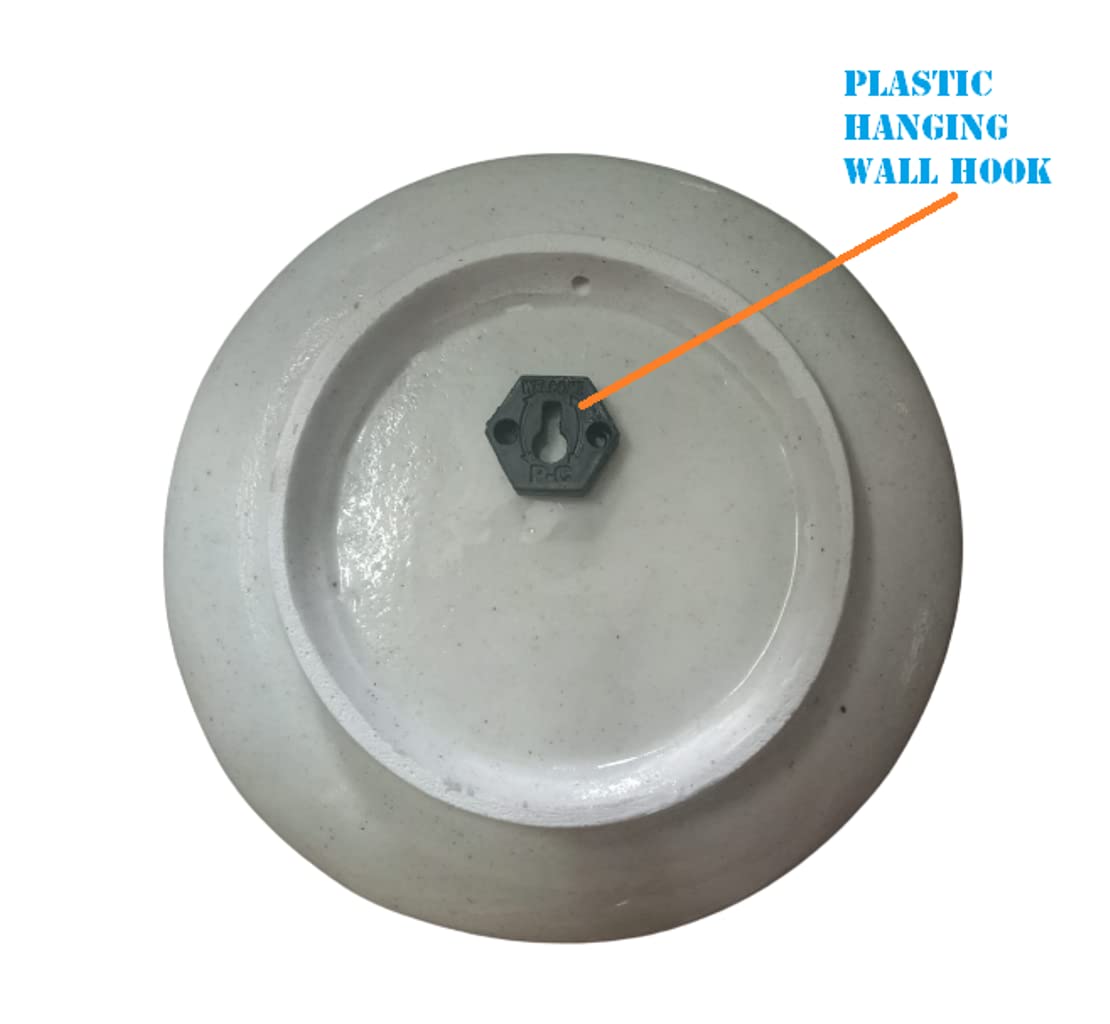
Potterywalaz Blue Pottery Ceramic Decorative Wall Hanging Geometrical Design Handmade Plate 10 Inch (PTN13) (Green)
Blue Pottery is widely recognized as a traditional craft of Jaipur of Central Asian origin. The name ‘blue pottery’ comes from the eye-catching cobalt blue dye used to colour the pottery. It is one of many Eurasian types of blue and white pottery, and related in the shapes and decoration to Islamic pottery and, more distantly, Chinese pottery. Jaipur blue pottery, made out of a similar fright material to faience, is glazed and low-fired. No clay is used: the ‘dough’ for the pottery is prepared by mixing quartz stone powder, powdered glass, Multani Mitti (Fuller’s Earth), borax, gum and water. Another source cites Katira Gond powder (a gum), and saaji (soda bicarbonate) as ingredients. Some of this pottery is semi-transparent and mostly decorated with bird and other animal motifs. Being fired at very low temperature makes them fragile. The range of items is primarily decorative, such as ashtrays, vases, coasters, small bowls and boxes for trinkets.


Potterywalaz carries authentic, unique handmade products created by handloom and handicraft artisans across India.

History Of Blue Pottery
The use of blue glaze on pottery is an imported technique, first developed by Mongol artisans who combined Chinese glazing technology with Persian decorative arts. This technique traveled east to India with early Turkic conquests in the 14th century. During its infancy, it was used to make tiles to decorate mosques, tombs and palaces in Central Asia. Later, following their conquests and arrival in India, the Mughals began using them in India. Gradually the blue glaze technique grew beyond an architectural accessory to Indian potters.From there, the technique traveled to the plains of Delhi and in the 17th century went to Jaipur.
The craft state that blue pottery came to Jaipur in the early 19th century under the ruler Sawai Ram Singh II(1835 – 1880). The Jaipur king had sent local artisans to Delhi to be trained in the craft. Some specimens of older ceramic work can be seen in the Rambagh Palace, where the fountains are lined with blue tiles. Sawai Ram Singh, in his reign (1835-1880), promoted art in Jaipur state with dedication. Legend says that impressed by the art of blue pottery, he brought artists from Delhi to Jaipur. However, Jaipur Blue Pottery introduced original innovations and mastered the art in such a way that it was claimed to have surpassed the Delhi pottery. Back in 1916, The Journal of Indian Art recorded that Jaipur ware was an improvement upon Delhi pottery. His successor Sawai Madho Singh patronized an exhibition of industrial arts and crafts in 1883 in which finest blue pottery pieces were exhibited with other arts and crafts. Prized possessions of the exhibition were displayed in a museum like space in the exhibition. Many of artisans had been trained in the school of art opened by Sawai Ram Singh and the then director of the school, Opendronath Sen, who had worked particularly to promote the blue pottery, was also happy to see it being showcased in the exhibition. Jaipur School indigenised the art of Blue Pottery through designs that were drawn from Indian life like Indian animals, Hindu deities, Indian human figures, features of Indian palaces etc.
However, by the 1950s, blue pottery had all but vanished from Jaipur, when it was re-introduced through the efforts of the muralist and painter Kripal Singh Shekhawat with the support of patrons such as Kamladevi Chattopadhaya and Rajmata Gayatri Devi. Today, blue pottery is an industry that provides livelihood to many people in Jaipur. Jaipur blue pottery, despite new innovations in vessels and designs , has retained the traditional blue and adheres to the traditional motifs rendering it instantly recognisable. The fountains inside the Polo Bar and the Maharani Suite within the Rambagh Palace complex are examples of some of the finest craftsmanship of Jaipur Blue Pottery and evidence the support of royal patronage to the art.
Steps to Make Blue Pottery

Making the Molding
The first step involves making the dough. The dough in made with raw materials like quartz powder, cullet, saji, katira gond, and multani mitti. These ingredients are mixed in a balanced ratio to form a non-sticky dough and then kept aside for a few hours. Moulds are then made from Plaster of Paris and given shape according to the needs. These moulds are then left to dry.

Wheel Works and Casting the Product
Next, the dough is uniformly flattened with the help of a flattening tool. The flattened dough is neatly placed on the mould and tucked in carefully to get the right shape. Thereafter, the mould with the dough stuffed in it is filled with burnt wood dust. It is then softly pressed to give it the shape of the mould and left to dry

Smoothening
The rough edges of the product are brushed with stone to rid it of the sharp edges. The artefact is further rubbed with sandpaper to make the surface smoother. Next, it is coated with a mixture of dough and water to fill in its pores. Once dried, it is rubbed with sandpaper yet again. This step is repeated for another round of coating. Following this, the artefact is dipped in a blend of quartz powder, powdered glass, flour and water and left to dry.

Painting and art work
The next step is to paint the product manually. First, the outlines are drawn with a customized artist brush. It is placed on the potter’s wheel to neatly draw the outlines with merely the tip of a brush. The intricacy of the design depends on the expertise of the artist. Once the outlining is finalized, the artist fills in the gaps with vibrant colors to complete the design.
Again Steps to Make Blue Pottery

Glazing
The sheen of the artefact is due to a special glaze prepared using myriad raw materials such as powdered glass, borax, zinc oxide, boric acid, and potassium nitrate. These raw ingredients are heated at a soaring temperature. The mixture is then put to cold water which makes it split to splinters. The splinters are collected and finely grounded. The grounded frit is then turned into a mixture by adding water to form a glaze.

Firing
Preparing a furnace for the firing of the pottery is a delicate process, and any misstep can lead to cracks in the product. The products are kept inside a furnace to dry. For approximately 4-5 hours firing of the pieces takes place with meticulous care to maintain even temperatures to avert any cracks.

Finish Products
Before taking out the products, the artisans wait for the kiln to cool off completely. It might take 2-3 days before the products can be taken out. The finished products are lightly cleaned before they are showcased or packaged.

Intricate Design
The motifs on the craft are reflective of the Turko-Persian culture with an indigenous touch. One can see a lot of geometric patterns, concentric floral designs with an interplay of intricate detailing in the Blue Pottery products.

Premium Pottery
India has witnessed unnumbered artisans feeding their families by working in the handicraft industry. It takes a lot of dedication and expertise to create such artistic, premium pottery. Every pottery, lamp, and decorative item finished by them reflects splendour and grandeur. In modern times, blue pottery has successfully diversified into kitchenware, toiletry, vases, accessory holders and home decor products.
Material: Ceramic, Quartz, Fuller Soil ; Finish: Hand Painted
Jaipur Blue Pottery
Size -10 INCH/25X25X4 CM
Craft Specialty: Blue Pottery Is Widely Recognized As A Traditional Craft Of Jaipur. Product Has Been Handcrafted By Skilled Artisans
You Can Use Decor Your Home, Apartment, Flat, Hotel, Restaurant, Office or use as a Serving Plate


